Patients are fighting for better treatment for a little-understood brain disorder — and say they currently feel they are ‘bounced around’ a ‘disjointed and messy’ healthcare system.
John Smith, of Pinchbeck, is calling for health care professionals to be ‘better educated’ on Functional Neurological Disorder (FND) which is estimated to affect between 600 and 1,200 people in Lincolnshire.
FND is where the brain struggles to receive and send information to the rest of the body – manifesting in symptoms such as seizures, chronic pain, insomnia, IBS (irritable bowel syndrome), limb weakness, memory issues, depression and migraines.
Mr Smith, who is a member of Pinchbeck Parish Council, lives with the disorder and has been on a mission to improve the current system and outcomes for other sufferers, by working with Lincolnshire’s Integrated Care Board (ICB).
He said: “At the moment its a complete and utter disjointed mess where people bounce around the system desperately seeking a solution.
“A lot of people with the disorder have a fairly normal life and then present symptoms which no one can explain – this can be frustrating.
“FND is the second most prevalent issue that faces specialist neurology but people are often dismissed. There is a lack of education from NHS professionals but also from people with the disorder.”
Hospitals vow to improve after failing to hit cancer targets
Watch More
The non-curable condition can affect people from as young as four-years-old up to the age of 94.Due to the lack of support, individuals with the disorder are often desperate for solutions and Mr Smith has helped organise events in Pinchbeck and Stamford to create a better support system for those who are struggling.
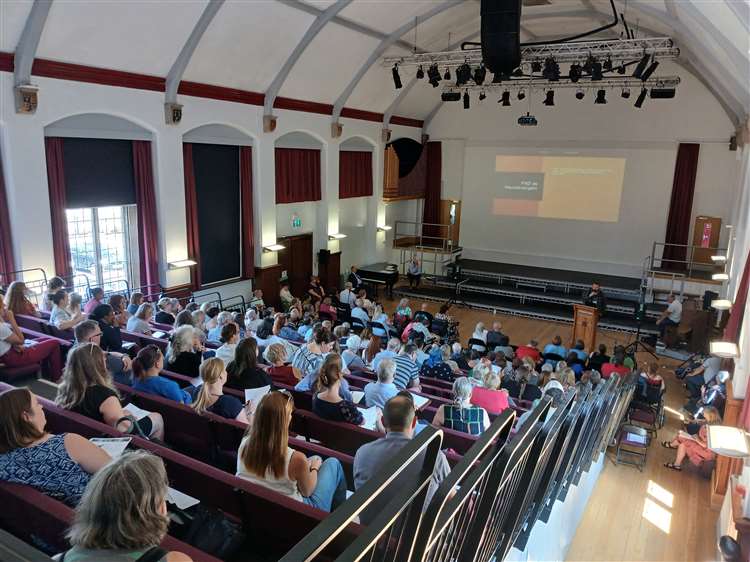
The meetings attracted hundreds of visitors, including people from Grimsby and other areas of the county who travelled to find answers.
Chief Nurse at Lincolnshire ICB, Martin Fahy, and Dr Andy Fox from Lincolnshire County Council Public Health agreed to chair the event, which was also attended by NHS professionals, social workers, community care workers and teachers.
“People felt lost and by putting the events on we gave them hope and purpose,” Mr Smith added.
“A number of professionals came along because they openly admitted to struggling with how to manage and make a difference to FND sufferers.
“They came along and listened and contributed to discussions and have continued to be in touch and help us – they have been fantastic.
“We truly believe that the event made a huge difference and influenced the ICB to begin to take action and establish some working groups to look more closely at FND and the support people need.”
Although the future is starting to look brighter for those diagnosed with the condition, the ride up until this point hasn’t been smooth for many individuals.
Jennifer Sullivan’s story began more than 14 years ago when she was biking home from work and suddenly felt extremely fatigued and experienced leg weakness.
A year later this progressed, and the 46-year-old from Boston, lost her ability to walk which made her bedridden and unable to work.
She said: “I was diagnosed with the disorder after having a few tests aged 31, and from that I was recommended a website to research
“It was clear at the time that the patient was left to manage their illness as there was nothing available.
“It can be very disabling and you can be as ill as someone with MS (Multiple Sclerosis) or Parkinson’s. However, there is no support with FND, you are just left to manage the illness on your own.
“Over the years I have seen some wonderful pain consultants but they have been limited due to a lack of NHS funding and FND awareness.
“The negativity has previously made me reluctant to see specialists as I felt I was being judged.
“There needs to be more research and training into the disorder so it can help sufferers get a diagnosis quicker, improve their symptoms and receive support from a team who specialises in FND.”
The ICB has said improving services and care for FND patients is high on the NHS’ agenda, and professionals are actively working to strengthen it in Lincolnshire.
It is hoped that the new dedicated pathway will bring together experts from physical and mental health services, alongside people with lived experience, to create a service which meets peoples needs in the future.
A spokesperson said: “FND is not a new condition, but our understanding of it has developed rapidly in recent years and although there isn’t yet a dedicated local FND pathway, work is well underway to change this.
“While education and specialist services are still growing nationally, Lincolnshire is taking proactive steps to build local expertise and ensure staff have the knowledge and confidence to support people with the disorder effectively.
“The development of a county-wide pathway reflects a positive shift — moving from fragmented care towards a well-informed, joined-up approach that puts people and recovery at the centre.”
A survey was launched at the beginning of the month, to help health care workers understand how patients were diagnosed and how they engaged with services in Lincolnshire.
This will close on Sunday, November 30. For more information click here.
In collaboration with Lincolnshire’s ICB, Mr Smith and a group of other FND sufferers have been busy creating a dedicated website using money raised through a crowd fundraiser, and hope to release it in the new year.
It is said to provide information about the condition, where to get help, how to join a self help group, support groups for carers and mental health services.
Mr Smith added: “We have managed to do so much in such a short space of time.
“Everyone is seeing the need is there and none of us can do it alone, so the key to making this work is collaboration.”
Article quoted from Lincsonline.co.uk